
Karol G, Bad Bunny, Young Miko, Peso Pluma.
¡Hola! And welcome back to GEN33, a newsletter about the business and culture of Latin America’s creative industries. Well, what a year it’s been! I’m talking about 2026! A week and a half in, and it already feels like we’re not sure how many more global developments we can handle.
This week’s issue is dedicated to music, where I’m highlighting a few things that stood out to me. These are by no means exhaustive, and I do owe you a more extensive news round in the next edition. As you can imagine, recent events have been quite consuming, but I did not want to miss delivering something you might enjoy reading, or that might help take your mind off the current state of the world, even briefly.
A few thoughts on Venezuela’s current status quo
I think many of us, especially Venezuelans, are holding several contradictory thoughts and feelings. Right now, every tweet, every piece of news, every headline can shift emotions in an instant. People from all corners of the world are trying to analyse what is happening, but the truth is we don’t really know. There are too many variables at play.
The events of January 3rd understandably offered the vast majority of Venezuelans a glimmer of hope. But there have been so many moments when we have been so millimetrically close to freedom, only for it to be taken away in an instant. It’s best to remain cautious and observant.
In the meantime, if it’s useful to anyone, I’ve revisited a piece I wrote in 2020 for The Business of Fashion about how fashion businesses and entrepreneurs have survived the Venezuelan crisis over the years. It gives a glimpse into what Venezuelans endure day in and day out to keep their businesses alive and feed their families, with many of the same problems persisting, if not worsening.
This is a situation with many shades of grey. It’s not black and white. It’s also worth remembering that social media is engineered to polarise, because outrage and division drive views, engagement and ultimately money.
Right now, I keep thinking about the political prisoners. They must be released, immediately. If amplifying those calls on social media does anything, I hope it at least brings more awareness of the situation.
Finally, I want to thank everyone who has donated to help repair the home of my close friend and their neighbours, whose houses were severely damaged by the explosions of January 3rd. There is still time to donate if you wish to do so, and the funds are also helping other families in the neighbourhood. Many of them are elderly and not particularly tech savvy, and would not know how to set up something like a GoFundMe themselves.
If you want to know more about their story, it appeared on CNN (was taken down), The Washington Post and several other outlets.

Table of Contents
Music in 2025
Bad Bunny and the Shift of Cultural Gravity

Where do we begin? His latest album Debí Tirar Más Fotos added another chart-topper to his list. His sold-out, headline-making Puerto Rico residency reportedly injected $400 million into the local economy. He hosted SNL, picked up six Grammy nominations, fronted a Calvin Klein campaign, became Spotify’s most-streamed artist of 2025 and landed a role in Caught Stealing. As if that wasn’t enough, he will be performing at the Super Bowl halftime show, enraging a predictable segment of America largely because he sings almost exclusively in Spanish (which makes me chuckle a bit inside).
Bad Bunny’s meteoric success speaks to something much bigger that has been brewing for years. I can’t pinpoint the exact moment, but I reckon it was at least as far back as 2018, when I first wrote about the influence of reggaeton in fashion for BoF. I later saw that trend confirmed when I interviewed Karol G, also for BoF. (Find CNN Style paywall-free version.)
And now it seems almost official that Latin American artists are no longer accommodating their music to a US-centric model. It is not just Bad Bunny. Artists such as Karol G, Peso Pluma, Kali Uchis, Cazzu and those working across other genres like Grupo Frontera, as well as Ca7riel & Paco Amoroso, are setting the language, the sound and the cultural centre of gravity.

Bad Bunny Stars in Calvin Klein Spring 2025 Underwear
What makes this moment particularly striking is that it is unfolding amid renewed hostility in the US, with ICE raids and a tense political climate. In times like these, the astronomical rise of Benito and other Spanish-language artists feels almost like taking a stand. The more hate is fomented, the more cultural power seems to accrue to artists from Latin America.
Indeed, Bad Bunny said that one of the reasons he chose not to perform in the US was his fear that ICE raids could take place during his concerts. The plan seems to have worked out for the best. By choosing to feature and elevate the island of Puerto Rico and its residents, the spotlight will likely keep benefiting the island for a long time to come.
As Sonia Thompson noted in an article for Inc., the choice reignited a sense of pride among people of Puerto Rican descent and introduced many others to the island and its culture. (For the record, his name is Benito Martínez Ocasio. The article mistakenly says Castro.)
The takeaway from her piece is clear:
“Brands — especially ones that want to engage consumers from underrepresented and underserved communities — have a responsibility to elevate the communities of the consumers they want to reach, rather than just attempting to extract from them.”
Are you reading this, fashion and luxury brands?
Ca7riel and Paco Amoroso’s breakout year

2025 was also huge for Ca7riel & Paco Amoroso. Before their Tiny Desk concert went viral in October 2024, the Argentine duo was still relatively unknown outside their home market. The performance, featuring funkier, more acoustic reworkings from Baño María, their debut album as a duo following earlier solo careers, amassed millions of views in a matter of weeks and sent them into the stratosphere.
By 2025, their 60-date world tour was selling out, with stops at global festivals including Coachella, Fuji Rock, Glastonbury, Roskilde and Lollapalooza in Berlin and Paris. For their solo dates, they had to request bigger venues for several cities.

In March, the duo released Papota, a sharp and humorous commentary on their rapid rise to fame. The album went on to win five Latin Grammys, including Best Alternative Music Album (Papota), Best Pop Song (“El Día del Amigo”) and Best Alternative Song (“#Tetas”), as reported by Billboard.
If there was any doubt about the scale of their popularity, Florencia Tellado, the genius hatmaker who made Paco’s teal fur hat for the viral Tiny Desk, suddenly found herself overwhelmed with orders from fans who wanted an identical piece. Tricky, as she sourced the fur from a vintage coat she found in a second-hand shop. (Reportedly she figured something out).
Another quiet star of this rise is Celina Lattanzio, their stylist, whose work has been as compelling as the music itself. Notably, she has made a point of sourcing looks locally whenever possible and favouring Argentine and Latin American brands for tours and appearances.
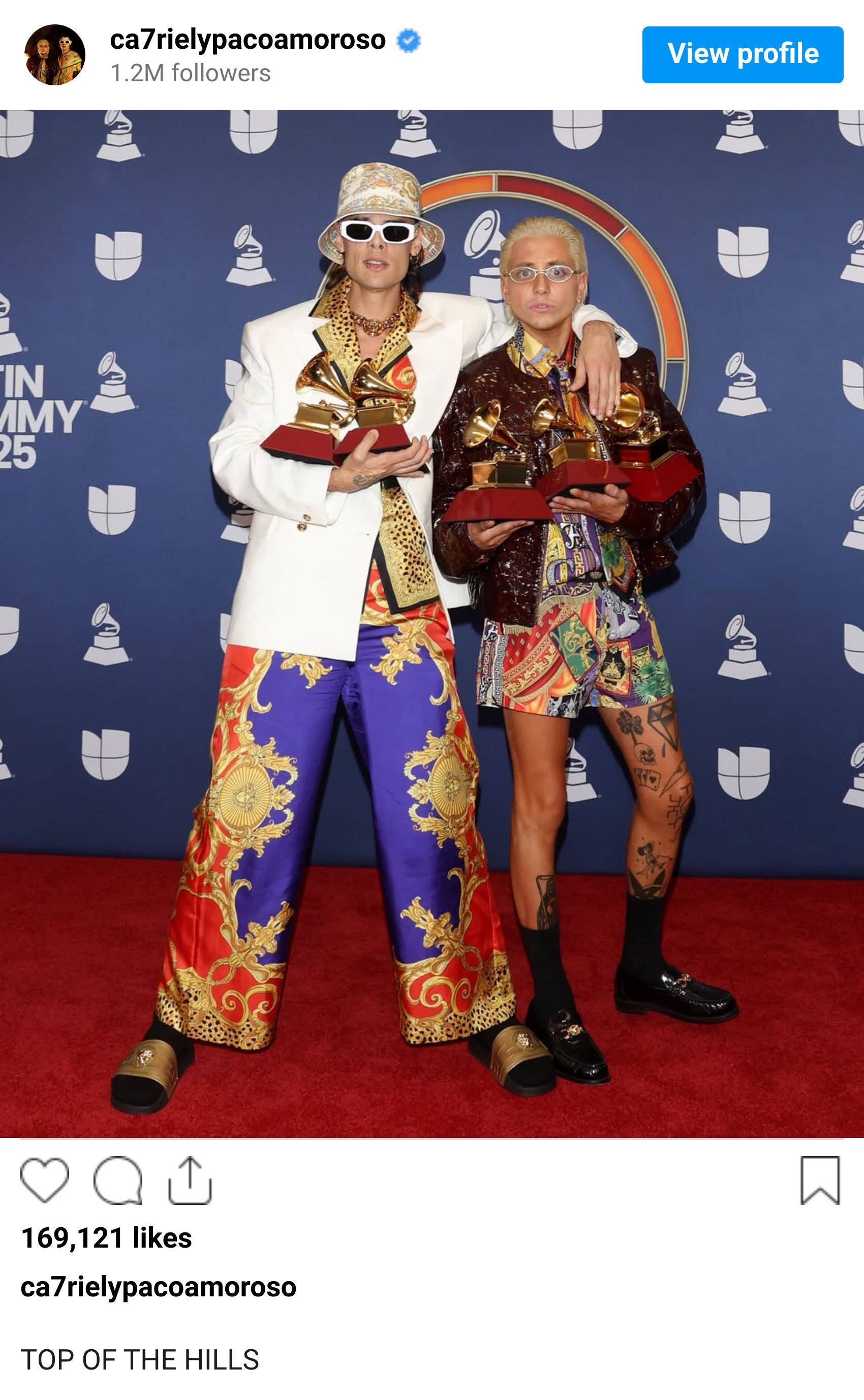
I’ve been saying for a while that it is only a matter of time before they land a major fashion campaign. In 2025, some early signs emerged: they appeared front row at Jean Paul Gaultier and Saint Laurent and collaborated with Inditex-owned Bershka.
And if that was not enough evidence of the relentless pace and ubiquity, on Grammy night they were working too. Just a few days later, they released the single Gimme More, which was filmed that award night. As Paula Lipko wrote on Medium, the release functioned both as a cultural event and a brutally honest act of self-critique. Burning their Tiny Desk outfits and the Papota inflatable heads became satire, mocking the industry’s insatiable demand for more while refusing to be boxed into a fixed formula.
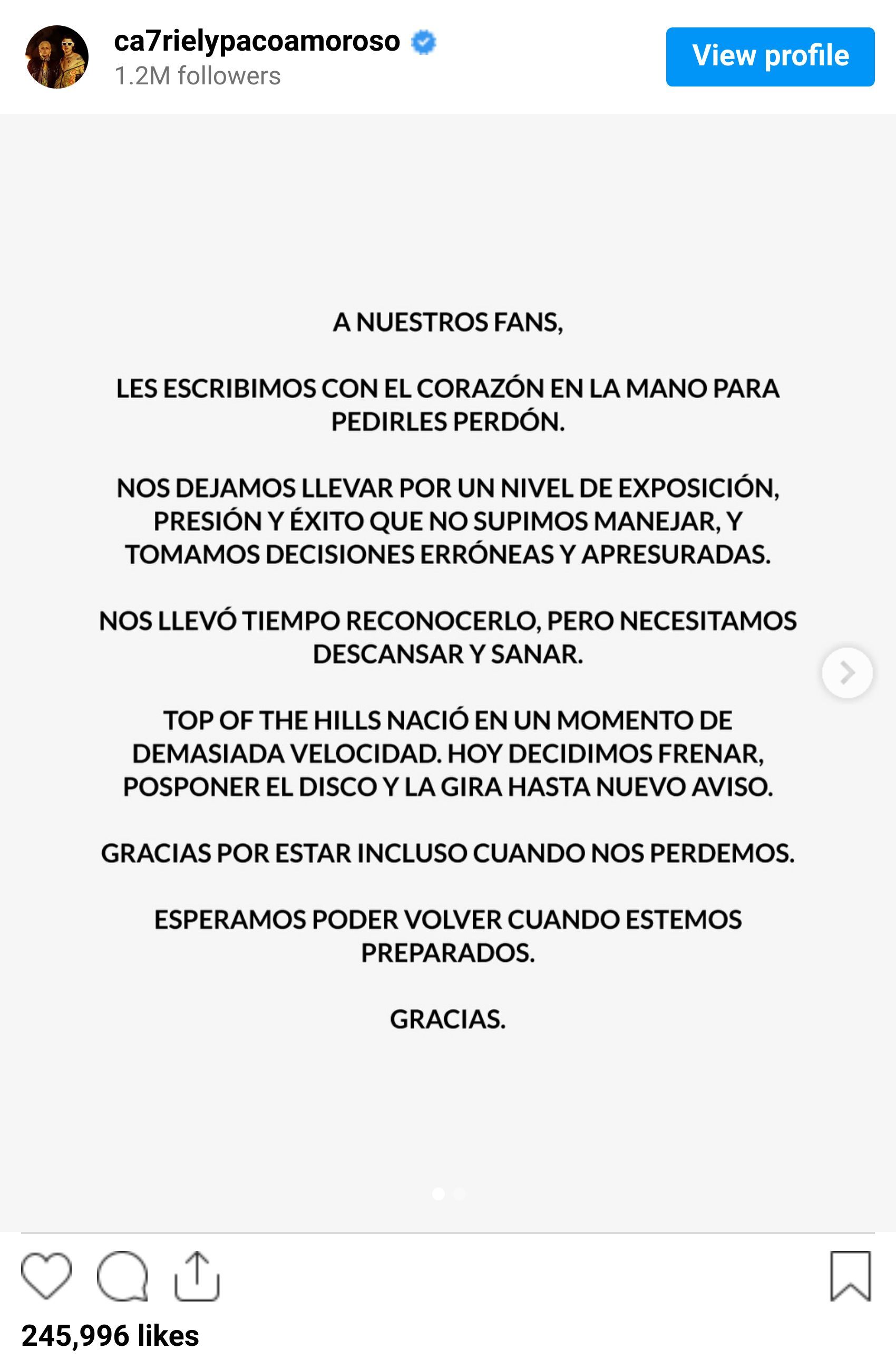
In that light, it came as little surprise that in their final post of 2025, on 19 December, the day their long-awaited album Top of the Hills was released, they chose to prioritise their wellbeing. Citing the strain of success and pressure, they admitted it had led to “wrong and rushed decisions”, announcing the postponement of their tour and new music until they are ready to return.
We will be happily waiting.
Women no longer on the periphery
In 2025, women in Latin music were no longer in the shadows of their male peers but among the most celebrated artists of the year.
Karol G closed the year with one of the strongest female showings in Billboard’s Latin album rankings with Tropicoqueta, featuring singles such as “Latina Foreva”, which climbed the Hot Latin Songs and Global 200 charts.
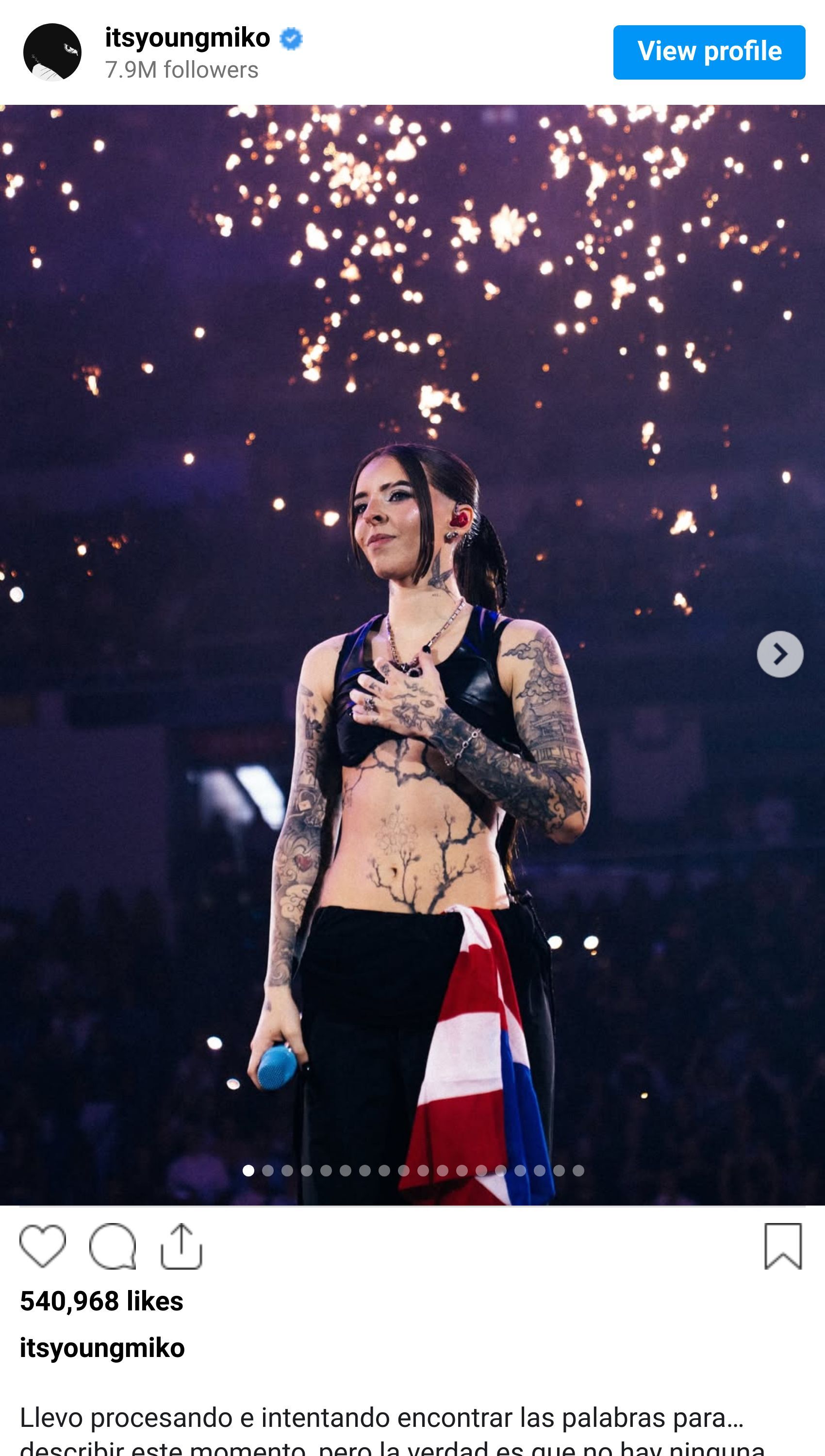
Puerto Rico’s Young Miko continued her ascent with Do Not Disturb, named among Billboard’s best Latin albums of the year, with “WASSUP” entering the Global 200.
Joaquina, from Venezuela, broke new ground with Al Romper la Burbuja. Mexico’s beloved Natalia Lafourcade released Cancionera, a deeply rooted exploration of Mexican folk and songcraft. Meanwhile, Argentina’s Cazzu unveiled Latinaje, earning nominations at the 2025 Billboard Latin Music Awards. Mon Laferte, who is Chilean and Mexican, was praised for her album Femme Fatale.
A few more highlights:
Colombia’s Nezza made headlines after singing the US national anthem in Spanish at Dodger Stadium, becoming a symbol of protest against Trump’s immigration raids.
UK-Colombian-Cuban artist Sophie Castillo, who opened for J Balvin in London in 2024, released her second EP Like a Star, continuing her steady rise.
Loren Aldarondo, vocal lead of Puerto Rican group Chuwi, further reflects the breadth and depth of women shaping Latin music today.
Regional Mexican music goes fully mainstream

Natanael Cano
As Billboard has reported, Latin music continues its billion-dollar trajectory despite political and regulatory pressure. Within that, música regional mexicana has moved decisively into the mainstream.
The shift has been building for at least two years and accelerated significantly in 2024. By 2025, regional Mexican music had become a global force rather than a niche genre, driven by younger listeners, streaming platforms and artists blending corridos, banda and norteño with hip-hop and trap influences, according to Luminate.
Some of the most influential artists in 2025 include Fuerza Regida, Peso Pluma, Tito Double P, Grupo Frontera, Junior H, Christian Nodal, La Arrolladora Banda El Limón and breakout names such as Netón Vega.
Meanwhile, Fuerza Regida’s “Marlboro Rojo” reached No. 1 on Billboard’s Regional Mexican Airplay chart in 2025, adding to the group’s run of chart-toppers, including “Por Esos Ojos” and “Tu Sancho”. For his part, El Fantasma hit No. 1 earlier in the year with “Ya Me Vale Madre”.
Community picks
I asked GEN33 readers and social media followers to mention some of their favourites of 2025:
Thank you for making it this far! I will be back next week with more stories, ideas and discoveries from across the region.
Do share if you like GEN33 and keep an eye out for upcoming issues.
Until then, take care and stay inspired.
Graciela.
GEN33 is a reader-supported publication. If you're liking it, tell a friend (or five).
My IG @gramartinm
Apologies for any typos, this newsletter was written by a human.
