In partnership with


Iguatemi São Paulo
All photos courtesy of Iguatemi.
Hello and welcome to GEN33, tracking shifts in the business and culture of Latin America’s creative industries.
I am very excited to bring you today’s issue, featuring my conversation with Ciro Neto, CEO of Iguatemi, one of Brazil’s leading premium retail and lifestyle companies. Iguatemi is part of Grupo Jereissati, a major Brazilian business conglomerate specialising in real estate and shopping centres.
During our exchange, we discussed how Brazil’s luxury consumer is evolving, why the local market has proved unusually resilient even as global luxury demand cools, and how experience-led retail has long underpinned high-end spending in the country.
But first, as promised, here is a news round-up of some interesting tidbits from around the web. For those of you who have asked, I’ll also drop some accounts and resources to better understand the situation in Venezuela at the bottom of the issue. Thank you to those with genuine curiosity and openness to learn more.
Introducing the first AI-native CRM

Connect your email, and you’ll instantly get a CRM with enriched customer insights and a platform that grows with your business.
With AI at the core, Attio lets you:
Prospect and route leads with research agents
Get real-time insights during customer calls
Build powerful automations for your complex workflows
Join industry leaders like Granola, Taskrabbit, Flatfile and more.
NEWSROUND
BREAKING: Valentino, Italy’s Fashion ‘Emperor,’ Has Died. Italian fashion designer Valentino Garavani has died at the age of 93, his foundation said on Monday. Before his retirement, Garavani built an international reputation for creating exquisite gowns and couture dresses for society figures, actresses and political women alike. [BoF]
Brazil Tops Latin America’s Billionaire Count as Oxfam Warns of a New Oligarchy. Oxfam says billionaire wealth rose 16% in 2025 to $18.3 trillion globally. Brazil now has 66 billionaires holding about $253 billion, the largest total in Latin America. The group warns that rising wealth concentration risks distorting politics and media, weakening democratic checks and balances. [Rio Times]
Zona Maco Unveils Digital Platform and New Sections for Its 22nd Edition.
The 22nd edition of Zona Maco Arte Contemporáneo will take place from 4 to 8 February at Centro Banamex, featuring 200 galleries primarily from the Americas and Europe. One of the most important art fairs in the region, Zona Maco comprises fairs dedicated to contemporary art, design, photography and the Antiques Salon, and this year introduces a new digital platform alongside expanded sections.[El Universal.mx]
Venezuela Built a Cultural Powerhouse — And Its Art World Refuses to Disappear. Once home to one of the most vibrant art and cultural scenes in the Americas, Venezuela fostered a world-class collecting culture where works by Picasso, Juan Gris and Francis Bacon were part of everyday life for elites. Although the country’s intellectual, creative and collecting class emigrated, its art world has not vanished. Instead, it endures through diaspora networks, memory and cultural resistance, refusing to disappear despite political collapse and global neglect. [Observer.com]
The “anti-Shein” bandwagon gains momentum. Lawmakers across Latin America are hardening import regulations on China-based ultrafast fashion to shield local textile industries as Shein’s popularity surges. [Rest of The World]
Mercosur Trade Deal Expected to Boost Luxury Imports in Latin America
Top officials from the EU and the South American bloc Mercosur signed a free trade agreement on Saturday in Paraguay, paving the way for the European Union’s largest-ever trade accord after 25 years of negotiations. A reduction in tariffs on EU goods would boost luxury and fashion sales across the Mercosur bloc, which includes Argentina, Brazil, Paraguay and Uruguay. (Venezuela has been suspended since 2016 for failing to meet basic democratic standards.) [Reuters, Atlantic Council]

Maria Corina Machado arriving at the White House on Thursday (Voceríavzla).
Beyond the controversy surrounding the Nobel Peace Prize, Maria Corina Machado turned her White House visit into a quiet act of protest. On Thursday, Venezuela’s opposition leader carried a tote by Venezuelan designer Vanessa Fariña, whose husband, Luis Tarbay, is one of the regime’s political prisoners, jailed since December 2024. The handbag became a subtle stand for Venezuela’s freedom.
Please consider getting a free or paid subscription to GEN33.
Everything I do — from fortnightly reporting and deep-dive analysis to coverage of Latin America across tech, art, business, fashion, music and more — is supported entirely by readers.
I have no outside funding and no financial backers. The ad in this email is a first test suggested to me by the Beehiiv ad network, and my independence as a journalist exists solely because you read and support this newsletter.
If you value this work, I hope you’ll help spread the word, upgrade to a paid subscription and help keep GEN33 independent. 🙏
Talking Luxury in Brazil with Ciro Neto, CEO of Iguatemi

Inside Iguatemi São Paulo.
Bringing nearly three decades of experience in Brazilian retail, Ciro Neto was appointed CEO of Iguatemi in March 2025, succeeding Cristina Betts. His background spans operations, commercial strategy, brand partnerships and expansion.
His career at Iguatemi began in 2010, where he held senior roles including Director of Operations and Commercial Director, overseeing a portfolio that today includes 17 shopping centres, two premium outlets, four commercial towers and the firm’s digital platform, Iguatemi 365.
After a period as Director of Development and Expansion at C&A Brazil, Neto returned to Iguatemi in 2023 as EVP of Commercial, where he restructured the commercial division and expanded the company’s international brand presence.

Ciro Neto, CEO of Iguatemi.
During our exchange, we discussed why Brazil’s luxury consumer has remained resilient amid the broader global downturn, and how experience-led retail — long before it became a global trend — has helped sustain demand. We also spoke about Iguatemi’s next phase of growth, as relatively new luxury consumers emerge beyond the traditional Rio–São Paulo axis, a shift Neto sees as opening up significant potential across the country.
That expansion comes at a moment when Brazil’s luxury market continues to outperform global peers. According to Euromonitor International, the market was valued at approximately $9.7 billion in 2025, driven by strong performance across personal luxury goods, automobiles and hospitality.
This growth persisted even as Brazil’s GDP slowed to 2.3 percent from 3.4 percent in 2024, according to the International Monetary Fund, amid tighter monetary policy, reduced fiscal support and heightened global uncertainty.
Despite these headwinds, Euromonitor projects that Brazil will outperform the region, with luxury market growth of 8.1 percent to $10.2 billion in 2026 and 9.1 percent to $11.5 billion in 2027. These growth rates exceed forecasts for Asia Pacific (4.4 percent), North America (6.3 percent) and Western Europe (7.2 percent).
In Brazil, malls play the role of Europe’s high streets
Malls have long played a central role in the entry of not just luxury but international brands into Brazil, and in favouring a relationship-focused model by providing regulated environments, security and continuity.
“Iguatemi focuses on the high end. It has been a port of entry for many of the most important luxury brands in Brazil. We started introducing them to the country 25 years ago. We brought Armani, and many brands followed,” he says.
“When you look at per capita income, the most important markets are São Paulo, Brasília and Rio Grande do Sul,” he says, where the company operates shopping centres.
He explains that São Paulo’s two flagship malls occupy the top tier of their luxury offer, with international brands accounting for roughly 40 percent of tenants. Meanwhile, Iguatemi Brasília is also home to houses such as Louis Vuitton, Gucci, Prada, Dolce & Gabbana and Tiffany.
Neto recounts that “two years ago Brazil had more than 700,000 luxury shoppers,” adding, “in five years, this number may reach around 1.3 million, as more and more clients begin to buy luxury.”
According to Euromonitor International, Brazil’s ultra-high-net-worth population (those worth over $50 million) is expected to rise by 33 percent, from 1,200 in 2025 to 1,600 by 2030. The number of high-net-worth individuals is forecast to grow from 19,500 to 24,200 over the same period.
Fflur Roberts, head of luxury goods at the firm, adds that “with more than 140,000 adults holding net wealth above $1 million and a growing appetite for luxury experiences, the market continues to offer long-term opportunity.”

JK Iguatemi in São Paulo
Where service drives luxury
Much of that opportunity, Neto argues, rests on Brazil’s deeply embedded service culture, one that predates the global fixation on “experiential luxury”.
“After the pandemic, Brazilians learned how to buy luxury in Brazil. If you have a lot of money and go to Paris, for example, you stand in queues. In Brazil it is totally different.” What Neto refers to is the highly personalised service model, which has long defined high-end retail at home. Clients and staff form close bonds, know their tastes and preferences, whereas abroad, they are just another shopper.
The group’s centres offer a concierge-led model with VIP access, personal shopping and private events, managed by dedicated relationship directors. For Neto, fashion sits at the core of Iguatemi’s strategy, both as a commercial engine and as a foundation of the mall experience.
These services became particularly important during the pandemic, when affluent consumers increasingly shopped remotely, often via WhatsApp, with purchases delivered to second homes outside São Paulo, including developments such as Fazenda Boa Vista.
Another defining feature of Brazilian luxury retail is payment flexibility, or parcelamento. “They can pay in instalments. In Brazil it’s common to pay in up to 10 instalments. It may sound crazy for other countries, but here it’s normal.”
He says Iguatemi’s loyalty programme has more than 800,000 active customers [across income brackets] and operates as a broader customer-relationship system rather than a simple points scheme. Members can use points for perks such as parking, lounges and meeting rooms, and brands use it to extend experiences beyond stores. “The result is a sales boom,” he says. Iguatemi São Paulo and JK malls are growing in double digits.
According to Iguatemi’s third-quarter earnings report, total sales reached R$6.0 billion in 3Q25 (around $1.2 billion), growing 22.5 percent versus 3Q24. Over the first nine months of 2025, total sales reached R$17.34 billion (around $3.4 billion), 22.5 percent higher than in the same period in 2024.
Brazil’s growing luxury consumer base
Together with the industry’s focus on integrated experiences and personalised service, another factor has contributed to the resilience of luxury in Brazil:
Neto points to the strength of the country’s agribusiness sector, which has been generating new wealth and expanding the pool of high-spending consumers. “With high interest rates — around 15 percent — people are able to put money in the bank and earn strong returns. Agribusiness represents about 30 percent of our GDP, and many newly wealthy consumers from the Midwest travel to São Paulo to shop for luxury. That is why sales are growing strongly.”

Comme des Garçons at Iguatemi São Paulo
Navigating the country’s barriers for entry
Brazil’s long history of political and economic volatility, combined with a complex tax and regulatory environment, continues to shape how international brands approach the market. “Brands prefer to not enter the country alone because the tax system is complicated,” he says and explains that a dedicated unit within the Iguatemi team takes on much of this process.
That unit is iRetail, Iguatemi’s in-house retail arm, through which the group operates several international brands in Brazil under franchise or partnership models. It acts as a landing pad for brands entering the country, helping them navigate regulatory complexity while also supporting client-facing initiatives.
Iguatemi also has a dedicated relationship director who works beyond commercial matters to curate experiences, travel, dinners and cultural moments designed to strengthen brand positioning and deepen client engagement. These initiatives are developed collaboratively with the brands and are outward-facing rather than internal.
Some brands include Comme des Garçons, Loewe, Polo Ralph Lauren, Vilebrequin, Birkenstock and others, “It is important to complement our mix,” Neto adds.
Iguatemi’s next phase of growth
In store for the next few years, the company is looking at regional expansion. Neto recounts that Iguatemi has recently taken over Rio Sul mall in Rio de Janeiro and is in the process of integrating it into the broader portfolio.
“In the next two years we will expand Brasília, increasing the GLA (gross leasing area) by 50 percent. It’s huge: 15,000 square metres. We have signed Zegna and others.”
Now, as one of the first shopping centres in Latin America turns 60, Iguatemi São Paulo is undergoing renovations, with a new fourth floor, new restaurants and an open mall on the roof.
Iguatemi is also investing in the fast-growing city of Campinas, about 84 kilometres from São Paulo, with a new mall anchoring a mixed-use neighbourhood. This includes the creation of an entirely new district, with over one million square metres of land, approximately 300,000 square metres of public park space to be donated to the city and more than 100 residential towers planned over time.
Iguatemi’s confidence signals a market that is not only growing but maturing, and seemingly less prone to the swings of global luxury cycles, which is critical in today’s volatile state of affairs. With a new Mercosur deal now in place, Brazil’s luxury market looks set to continue to thrive.
More broadly, the next phase of luxury in Brazil appears less about chasing volume and more about deepening a locally rooted model of luxury that global brands are only beginning to understand.
How To Make Sense of Venezuela’s New Reality
I don’t think even Venezuelans have been able to make sense of anything over the past 27 years. But I am hoping these accounts will help.
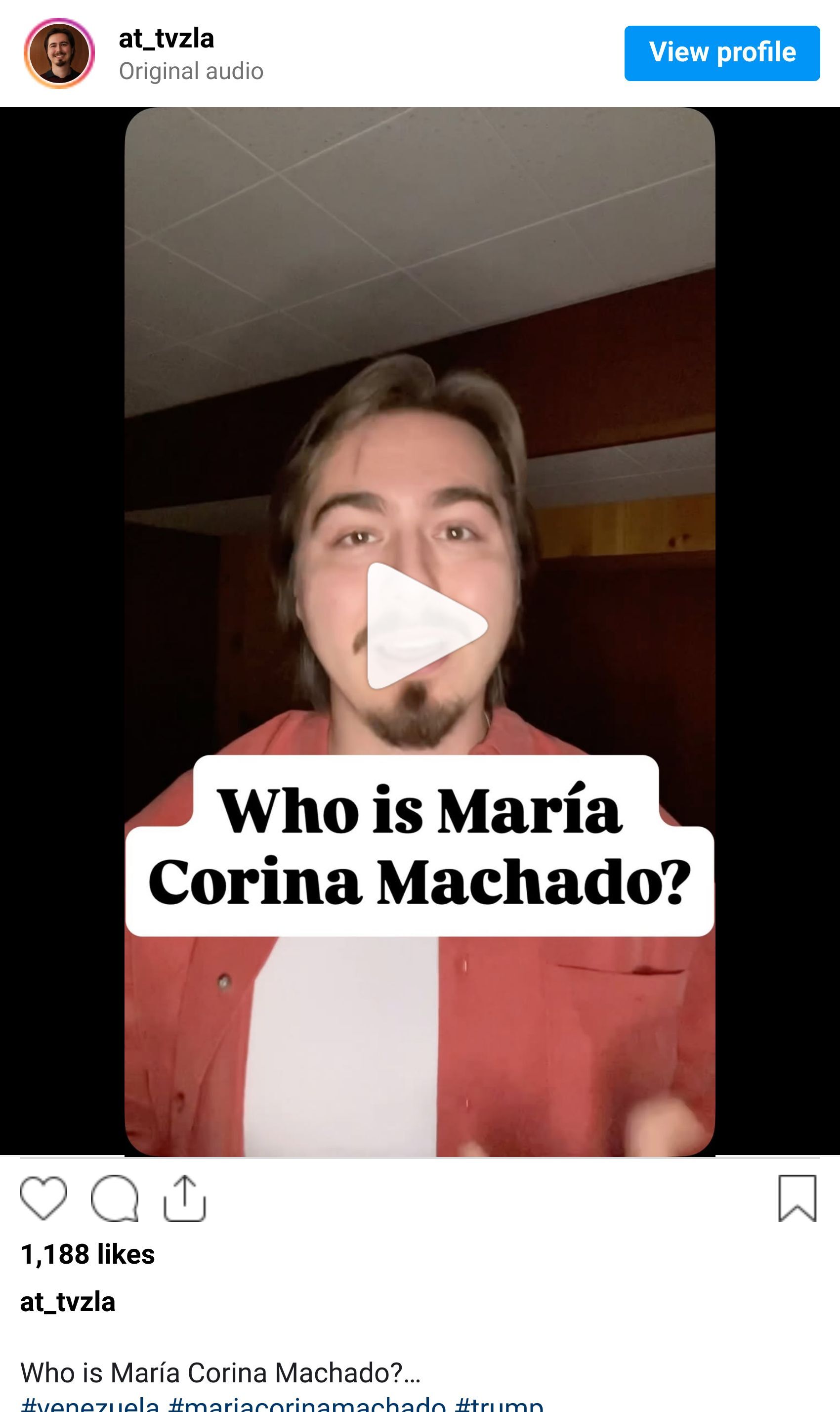
For someone who breaks down the Venezuela situation easily and clearly, follow Alex_Vzla. He makes short, informative videos in English that explain things succinctly with great accuracy. He’s Venezuelan, studied international law at Harvard and history at Stanford. His commentary and analysis are brilliant.
Other journalists I follow include Maibort Petit, an investigative journalist based in NYC. She covers organised crime, courts, money laundering and financial fraud. She’s great to follow for news on Maduro and Flores’s upcoming trials and on the thugs basically running the country.
Alfredo Romero and Gonzalo Himiob of Foro Penal have bravely documented the names and real numbers of political prisoners in Venezuela amid heavy repression. Needless to say no one trusts any regime data.
As of today, 143 people have been released, not freed, as they remain under gag orders, travel bans and other restrictions. More than 700 innocent people are still held in jails, many of them tortured, imprisoned for crimes they did not commit or simply for expressing anger at the abuse and misery in the country. Reportedly, the regime was instructed to release them, but it has continued to lie about the numbers and to defy the orders by failing to comply.
Other accounts to follow:
Runrunes, Patricia Janiot and many. This list is by no means exhaustive, but I hope it helps.
Thank you for making it this far! I will be back next week with more stories, ideas and discoveries from across the region.
Do share if you like GEN33 and keep an eye out for upcoming issues.
Until then, take care and stay inspired.
Graciela.
GEN33 is a reader-supported publication. If you're liking it, tell a friend (or five).
My IG @gramartinm
Apologies for any typos, this newsletter was written by a human.
