In partnership with

¡Hola! And welcome back to GEN33, bringing you the latest business and culture insights from Latin America’s creative industries.
Last Sunday marked International Women’s Day and, as always, there were plenty of lists circulating celebrating remarkable women. I briefly considered putting one together, but quickly realised it would be impossible to do justice to the sheer number of extraordinary women shaping Latin America’s creative industries. Besides, GEN33 features amazing women every in every edition. Women’s Day is every day.
In this issue, I caught up with Venezuelan artist Victoria Ruiz, who walked me through the thinking behind her recent performance and exhibition at the Sarabande Foundation in London. BTW Do check our socials @gen33mag as we'll be putting out some brand new video content about this! Big shoutout to Helena Cebrian for her editing magic 🪄.
I also caught up with Brazilian jewellery designer and artist Helena Palmeira at Collect, the contemporary craft fair at Somerset House.
There’s also a roundup of some tidbits from across the web: Buenos Aires Fashion Week, the women who redefined art in Venezuela, Brazil’s Oscar nominee Wagner Moura, architect Smiljan Radić Clarke, and more.
¡Vamos!
Advertisment

Tech moves fast, but you're still playing catch-up?
That's exactly why 200K+ engineers working at Google, Meta, and Apple read The Code twice a week.
Here's what you get:
Curated tech news that shapes your career - Filtered from thousands of sources so you know what's coming 6 months early.
Practical resources you can use immediately - Real tutorials and tools that solve actual engineering problems.
Research papers and insights decoded - We break down complex tech so you understand what matters.
All delivered twice a week in just 2 short emails.
ART
Victoria Ruiz and the Living World of Para Tu Altar
Last week I stopped by the Sarabande Foundation for a special evening that formed part of the foundation’s International Women’s Day exhibition, where several residents presented a selection of works. Venezuelan artist Victoria Ruiz had three pieces on display and two photographs from her series Para Tu Altar. But the highlight of the night was the performance that sees this project come to life, quite literally.

Born in Caracas, Ruiz is a multidisciplinary artist working across image, costume and performance, currently completing a residency at Sarabande. For those unfamiliar, Sarabande is the foundation established by the late fashion designer Alexander McQueen to support, mentor and provide scholarships and studio spaces for emerging artists and creatives.
For the exhibition, Ruiz revisited an earlier project, Para Tu Altar. It emerged during a moment of personal reflection on faith, “it's meant to be a tribute to the saints and it's offering a perspective of an interconnected world through the divine forces of nature,” she explains.

Defiende Lo Sagrado, Por Favor. (Defend What Is Sacred, Please.), 2024. 🦜
Each image in the series functions as what she calls a “portal”, a self contained universe built from her reinterpretations of symbolic entities. The images carry layers of symbolism drawn from different sources derived from her Venezuelan roots and influences throughout life, including Brazil. Ruiz makes it clear she does not want to define the work too rigidly. Instead, she builds a visual world that reflects her inner landscape while intentionally leaving space for interpretation.
“The beauty of it is that it makes you feel where you are, who you are evoking, and you really have to trust yourself.”
During the event, Ruiz and another performer wore what she calls “ceremonial garments”, sculptural costumes that transform the wearer into a character. “When you wear it you become the character that is layered with different symbolisms, usually inspired by my Latin American background, my Venezuelan background and my Brazilian influence. That performance is meant to be a dialogue in which music activates these pieces and they come to life.”

Oyá, Diosa Y Fe (Oya, Goddess and Faith), 2024. 🦋
I asked Ruiz about her experience wearing the garment and she describes it as somewhat intentionally disorienting, as the costumes restrict the senses, she explains. “you can’t see, you can’t hear, can’t smell. It's very hard, but that is the beauty ot it, it makes you have to feel where you are, who you are evoking, and you really have to trust yourself.”
Seen in person, the effect is rather hypnotic. What begins as a photographic series unfolds into a living ritual, one where image, costume and movement blur into a single symbolic language.
Additionally, Victoria also had one of her pieces (from a different series) exhibited at the Collect London fair as part of Sarabande’s House of Bandits.

We Carried the Color So the Land Would Still Believe in Us, 2025. Victoria Ruiz.
CRAFT AND DESIGN
Material Memory with Jewellery Designer Helena Palmeira

Just a few days before, I stopped by Collect, the fair presented by the Crafts Council at Somerset House, dedicated entirely to museum-quality contemporary craft and design, held earler this month. I went to see the work of jewellery designer Helena Palmeira, exhibiting with Sarabande’s House of Bandits, a platform bringing together artists and designers from the Sarabande foundation’s residency programme.

House of Bandits at Collect London. Photo via House of Bandits.
Palmeira, who hails from Goiânia, Brazil, is a Central Saint Martins MA graduate and part of the 2025/26 Sarabande cohort. Her practice approaches jewellery as small-scale sculpture, working with reclaimed wood, Amazonian seeds and precious stones. Many of the wooden elements, she explained, come from pieces of furniture that can no longer be restored. In her hands, they become fragments of material history carried into new forms.

Jarina Ring. Seed is sculpted by hand, metal part hand made.
When I mentioned the delicacy of the rounded shapes in her pieces, she explained that the forms were inspired by binding. She described wanting “to bind the materials to the skin and create this roundness, like the shapes of the body being bound.”
A choker and bracelet on view for example, were crafted from salvaged wood filed by hand, paired with a handmade metal structure. The wood is bound and shaped through tension, then closed with a single emerald, a gentle gesture of holding history close to the body.

Salvaged wood is filed by hand, metal part hand made.
The rich texture of the wood contrasts with its minimal structure, creating a quiet tension that invites the body to become both wearer and sculpture.

Reclaimed wood pendant with citrine, 9ct recycled gold and leather cord with gold tips. Hand carved and bound with gold wire.
Advertisement
The News Source 2.3 Million Americans Trust More Than CNN

Tired of spin? The Flyover delivers fast, fact-focused news across politics, business, sports, and more — free every morning. No agenda. No paywall. Join 2.3 million readers who trust us to start their day right.
/
ART & VENEZUELA
What Does the U.S. Capture of Maduro Mean for Venezuelan Artists?

Venezuelan artist Francisca Sosa López was in Caracas during the U.S. bombings and the capture of Nicolás Maduro. She spoke to Ocula Magazine about what she experienced that day. She also reflected on how the possible end of the Chavista–Maduro regime could bring new hope for change among the country’s artists, though uncertainty and fear remain.
López, who is based primarily in London, is one of 8 million Venezuelan nationals who have left the country since Maduro came to power in 2013.
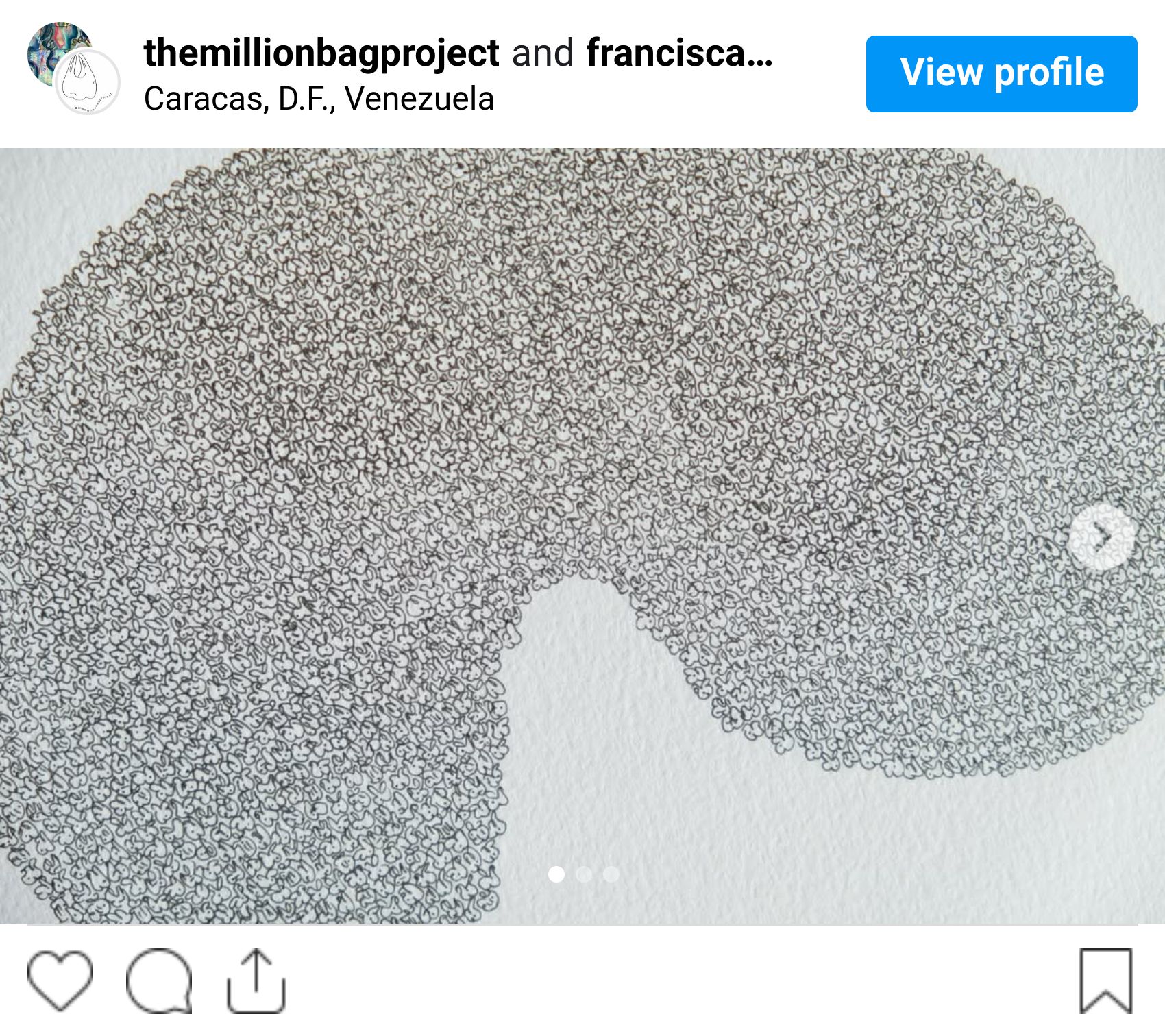
The Million(s) Bag Project (2020–ongoing), a lifelong daily performance, she draws one bag for each Venezuelan who has left the country, marking the quiet calculation of what one takes when leaving home.
For many Venezuelan artists, censorship, fear of retaliation and even logistical obstacles like shipping artwork have pushed them to live and work abroad.
Fellow London-based Venezuelan artist Daniel Rey described the current moment with similar ambivalence. It is possible, he notes, to feel relief at the prospect of Nicolás Maduro being held accountable while also feeling deep sadness at the sight of Venezuela once again caught in violence, with no clear democratic path forward.

To Strike or To Be Struck,” 2025, by Daniel Rey. Recently shown at @salonacme 2026 in CDMX.
🇻🇪 6 Women Who Redefined Venezuelan Art
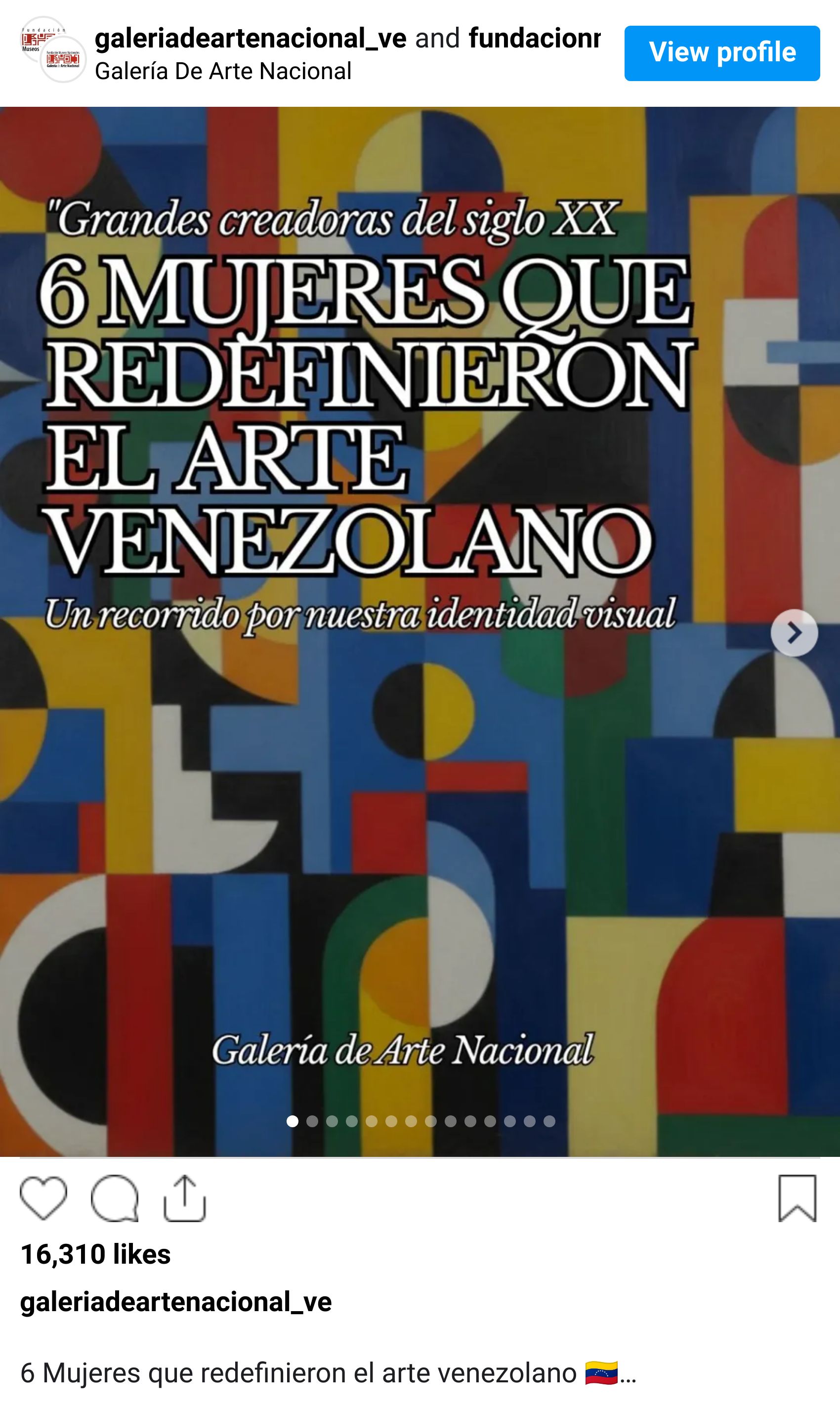
Throughout the twentieth century, artists such as Luisa Richter, Gego, Elsa Gramcko, Lía Bermúdez, Mercedes Pardo and Marisol Escobar reshaped the fabric of Venezuelan art, leaving a legacy that continues to resonate today.
Luisa Richter, Gego and Elsa Gramcko, curiously all of German descent, played a key role in the development of abstract art in Venezuela. Gego, born Gertrud Goldschmidt, became renowned for her delicate wire sculptures and spatial installations that she described as “drawings without paper.”
Elsa Gramcko was known for her geometric and later informalist works, expanding from painting into sculpture and assemblage using unconventional materials.
Luisa Richter developed an influential abstract practice that included painting, collage and printmaking, exploring layered surfaces and spatial compositions.
Sculptor Lía Bermúdez created large-scale works and architectural interventions that became part of many public and private spaces in her native Venezuela.
Mercedes Pardo was one of the most important representatives of Venezuelan abstract painting, celebrated for her exploration of colour and texture.
Marisol Escobar, internationally known simply as Marisol, gained global recognition for her sculptural works that combined Pop Art sensibilities with carved wood figures and assemblage to examine identity and contemporary culture.
ARCHITECTURE
Santiago-based architect Smiljan Radić Clarke wins Pritzker Prize

Pritzker Prize-winning architect Smiljan Radić Clarke. Photo: Tom Welsh for The Pritzker Architecture Prize.
Chilean architect Smiljan Radić has emerged as the Pritzker Architecture Prize winner, an award often dubbed the Nobel of architecture. The jury citation referred to his work as “an optimistic and quietly joyful shelter,” describing it as positioned at “the crossroads of uncertainty, material experimentation, and cultural memory.” [Deezen]
The architect reported to NPR that he was honoured by the win, although he cheekily remarked that it would probably bring more exposure than he would like.

Teatro Regional del Biobío designed by Smiljan Radić' Concepción, Chile. Photo by Cristóbal Palma. (Via Dezeen).
Radić, who is 60 and the second Chilean architect to win the award, has designed dozens of buildings that have earned him a formidable reputation in artistic and intellectual circles.

Photo courtesy of Alexander McQueen.
Radić famously topped a car park at Tobacco Dock with an inflated, bulbous dome for Alexander McQueen’s Spring Summer 2022 show space. The structure was formed from a transparent panelled membrane attached to a curving circular pipe at its base. This membrane was held in place and stabilised by a network of steel tensile cables running between channels along the inflated surface.[Dezeen]
FASHION
Buenos Aires Fashion Week marks 25 years with focus on cultural roots

Held from 2 to 6 March, the biannual event organised by IRSA, a leading Argentine real estate developer and shopping centre operator, took place at the exhibition space La Rural and across several locations in Buenos Aires.
Gastón Manganiello, CMO of Grupo IRSA and director of BAFWEEK, as it is also known, said they wanted it to be “an ongoing reflection of local fashion talent,” highlighting its role in “building community, visibility and opportunities for brands at every stage.”
For the Autumn Winter 2026 season, the event, recognised as the Argentine capital’s leading fashion platform, set out to reflect themes shaping the industry today, including sustainability, the revival of cultural roots and a sports-inflected urban language.
To this end, the mix of participants ranged from craft-focused brands Sadaels, Valentina Schuchner, Velasco and García Bello, and contemporary labels such as Las Pepas, Luz Ballestero and Mishka, to urban-focused brands including Kosiuko and Bolivia, alongside designer-led names such as De Crisci and Bullbenny.
Additionally, in the 10th BAFWEEK x Istituto Marangoni contest, finalists García Bello, Valentina Schuchner, Velasco and De Crisci competed for a three-week course at the renowned fashion school in Milan in September this year. The winner, announced on wednesday, was Velasco.
FILM
Why The Secret Agent should win the best picture Oscar

Chief film critic for The Guardian, Peter Bradshaw, argues that The Secret Agent is well worthy of winning Best Picture at Sunday’s Oscars. The drama thriller is produced by husband and wife team Emilie Lesclaux and Kleber Mendonça Filho, who also directs. Bradshaw described it as “a movie made with effortless style and touched with pure cinematic inspiration.”
Best Actor nominee Wagner Moura has also received strong praise for his performance as Armando, a widower and engineering professor trying to escape the country with his son during the military dictatorship. Bradshaw said Moura’s performance had “intelligence and strength.” Let’s keep our fingers crossed!
No Me Olviden, Falto Yo
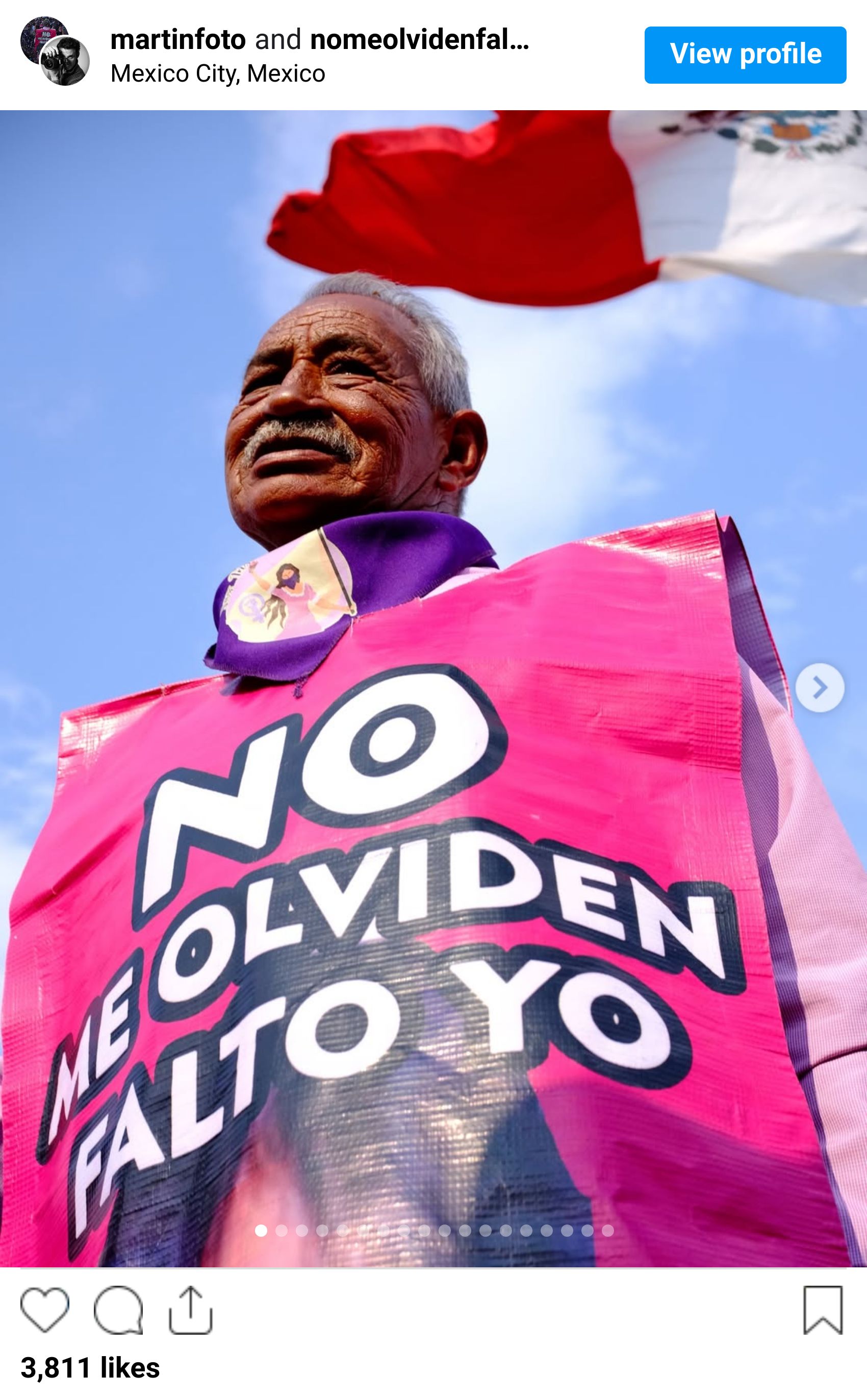
A new documentary by director Nadia Guillén Campos follows José Luis Castillo, who has spent more than a decade searching for his daughter Esmeralda Castillo, who disappeared in Ciudad Juárez in 2009 at the age of fourteen.
What began as a father’s search gradually became a form of public protest. Over the years Castillo became a powerful presence at the 8 March marches in Mexico City, carrying a banner with his daughter’s image and the words “No me olviden, falto yo” (“Don’t forget me, I’m missing”). During demonstrations he would throw pink glitter into the air, while the women around him echoed back: “No estás solo.” The documentary follows that story of persistence, grief and collective solidarity.
CULTURE SIGNALS
Women Shaping Brazil’s Creative Industries
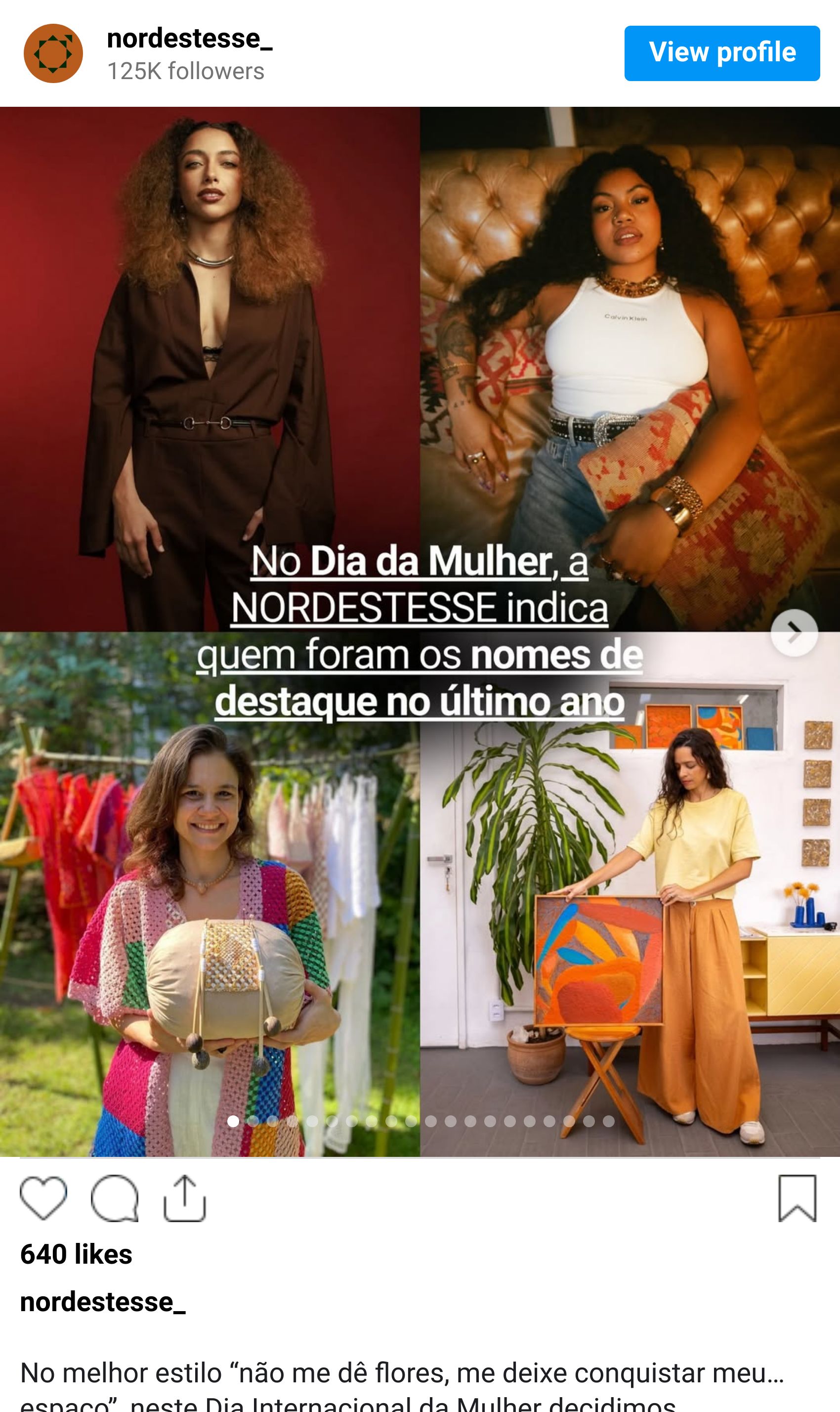
For International Women’s Day, Revista Nordestesse, a Brazilian platform focused on creative talent from the Northeast, highlighted women shaping culture across fashion, art, music, gastronomy and design.
Among them are designer Helô Rocha, whose collaboration with Riachuelo brought her craft-driven aesthetic to mass retail; artist Gê Viana, featured at the 36th São Paulo Biennial; rapper Duquesa, a rising voice in Brazilian hip-hop; chefs Lisiane Arouca, Kafe Bassi and Irina Cordeiro, redefining contemporary Brazilian cuisine; designer Brenda Guimarães, turning waste into design objects; and journalist Daniela Falcão, a key figure in Brazil’s editorial landscape.
OPEN CALL:
CREATURA ISSUE 02
Creatura Magazine launches its international photography open call for Issue 02 of its print edition. Artists and photographers are invited to reflect on the idea of home, not only as a physical space but as an emotional, political and symbolic territory. [Creatura]
The call is open to Latin American artists and to photographic projects connected to Latin America. Selected works will be featured in a collective section of the magazine. Deadline: 22 March. Submission fee: €15
¡GRACIAS!
Thank you for making it this far! Back next week with more stories, ideas and discoveries from across the region.
Do share if you like GEN33 and keep an eye out for upcoming issues.
Until then, take care and stay inspired.
Don’t be tight, give us a follow!
GEN33 is a reader-supported publication. If you're liking it, tell a friend (or five).
Instagram @GEN33Mag
LinkedIn Page GEN33Mag
My IG @gramartinm
Apologies for any typos, this newsletter was written by a human.
Until next time.
Graciela.
